
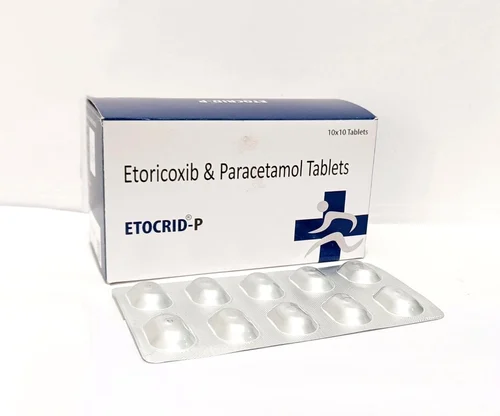
Etocryst-P
Etoricoxib 60 mg
Class: Nonsteroidal Anti-Inflammatory Drug (NSAID), specifically a COX-2 inhibitor.
Mechanism of Action: Etoricoxib selectively inhibits the COX-2 enzyme, which is involved in the production of prostaglandins that cause inflammation, pain, and fever. By inhibiting COX-2, etoricoxib reduces these symptoms.
Uses:
- Pain Management: Effective for managing moderate to severe pain, including osteoarthritis, rheumatoid arthritis, and acute pain.
- Inflammation: Reduces inflammation associated with various conditions.
Common Side Effects:
- Gastrointestinal issues (e.g., nausea, abdominal pain)
- Headache
- Dizziness
- Fluid retention
- Elevated blood pressure
Precautions:
- Cardiovascular Risk: Use with caution in individuals with a history of heart disease or high blood pressure.
- Gastrointestinal Issues: Long-term use can increase the risk of gastrointestinal ulcers and bleeding.
- Kidney Function: Monitor kidney function, especially in patients with pre-existing kidney conditions.
Paracetamol 325 mg
Class: Analgesic and Antipyretic (pain reliever and fever reducer).
Mechanism of Action: Paracetamol (also known as acetaminophen) reduces pain and fever by inhibiting the synthesis of prostaglandins in the central nervous system. It is not an anti-inflammatory drug and does not affect COX-1 or COX-2.
Uses:
- Pain Relief: Effective for mild to moderate pain, such as headaches, muscle aches, and toothaches.
- Fever Reduction: Reduces fever associated with various conditions.
Common Side Effects:
- Generally well-tolerated.
- Rarely, it can cause allergic reactions or liver damage, especially with overdose.
Precautions:
- Liver Health: Use with caution in patients with liver disease or those consuming alcohol regularly.
- Dosage Limits: Avoid exceeding the recommended dose to prevent liver toxicity.
Combined Use of Etoricoxib and Paracetamol
Rationale: Combining etoricoxib with paracetamol can provide enhanced pain relief. Etoricoxib addresses inflammation and pain through its COX-2 inhibition, while paracetamol offers additional analgesic effects and fever reduction.
Benefits:
- Enhanced Pain Relief: The combination can be more effective in managing pain than either medication alone, particularly for conditions with both inflammatory and non-inflammatory pain components.
- Reduced Dosage: Using both medications may allow for lower doses of each, potentially reducing the risk of side effects compared to higher doses of a single medication.